

As humans, we naturally gravitate towards the negative. We tend to focus on our flaws and mistakes rather than our successes and accomplishments. This negative thinking pattern often leads to self-doubt, insecurity, and low self-esteem – in short, the dreaded negative self-talk cycle.
There are several reasons why it’s so easy to get caught in this cycle. Firstly, our brains are wired to protect us from danger. Negative self-talk is a survival mechanism that helped our ancestors avoid danger and stay alive. Our brains are always on the lookout for potential threats, and negative thoughts help us prepare for worst-case scenarios.
Secondly, we often internalize the negative feedback we receive from others. Whether it’s criticism from a boss or a negative comment from a friend, we tend to take these comments to heart and believe them to be true. This negative feedback can contribute to feelings of inadequacy, self-doubt, and low self-esteem.
Thirdly, social media and the constant comparison game can exacerbate negative self-talk. With endless feeds of curated, picture-perfect lives, it’s easy to feel like we don’t measure up. Constant comparisons to others can lead to feelings of inadequacy, which can fuel negative self-talk.
Finally, past experiences can also contribute to negative self-talk. If we have experienced failure in the past, we may believe that we are destined to fail in the future. We may doubt our abilities and abilities to make positive changes, which can result in a constant barrage of negative thoughts and self-talk.
The negative self-talk cycle is all too easy to get caught in. Our brains are wired for survival, we tend to internalize negative feedback, social media can fuel comparison, and past experiences can contribute to negative thinking patterns. Recognizing these factors can help break the cycle and shift towards more positive self-talk. By focusing on our strengths, accomplishments, and positive feedback, we can rewire our brains to see ourselves in a more positive light.
While it’s easy to get caught in the negative self-talk cycle, there are several things you can do to shift your thoughts and promote positive self-talk:
- Identify and acknowledge your negative thoughts: The first step is to become aware of your negative thought patterns. Pay attention to your thoughts and the language you use when speaking to yourself.
- Challenge your negative thoughts: Once you’ve identified your negative thoughts, challenge them. Ask yourself if they’re true, if they reflect reality, or if they’re rooted in past experiences.
- Reframe negative thoughts: Instead of dwelling on negative thoughts, reframe them in a positive light. For example, instead of “I’m not good enough,” try “I’m working on improving and making progress.”
- Use positive affirmations: Affirmations are positive statements that you can repeat to yourself to promote positive self-talk. Some examples include “I am capable and confident,” “I deserve love and respect,” and “I can handle any challenge that comes my way.”
- Practice self-compassion: Be kind and understanding towards yourself. Treat yourself like you would treat a loved one. Instead of criticizing yourself, practice self-compassion and understanding.
- Seek support: Don’t be afraid to reach out to friends, family, or a mental health professional for support. Sometimes, negative self-talk can be a symptom of a deeper issue that requires professional help.
By practicing these strategies, you can shift towards more positive self-talk and promote a healthier mindset. Remember, change won’t happen overnight, but with persistence and consistency, you can break the negative self-talk cycle and promote a positive, confident self-image.
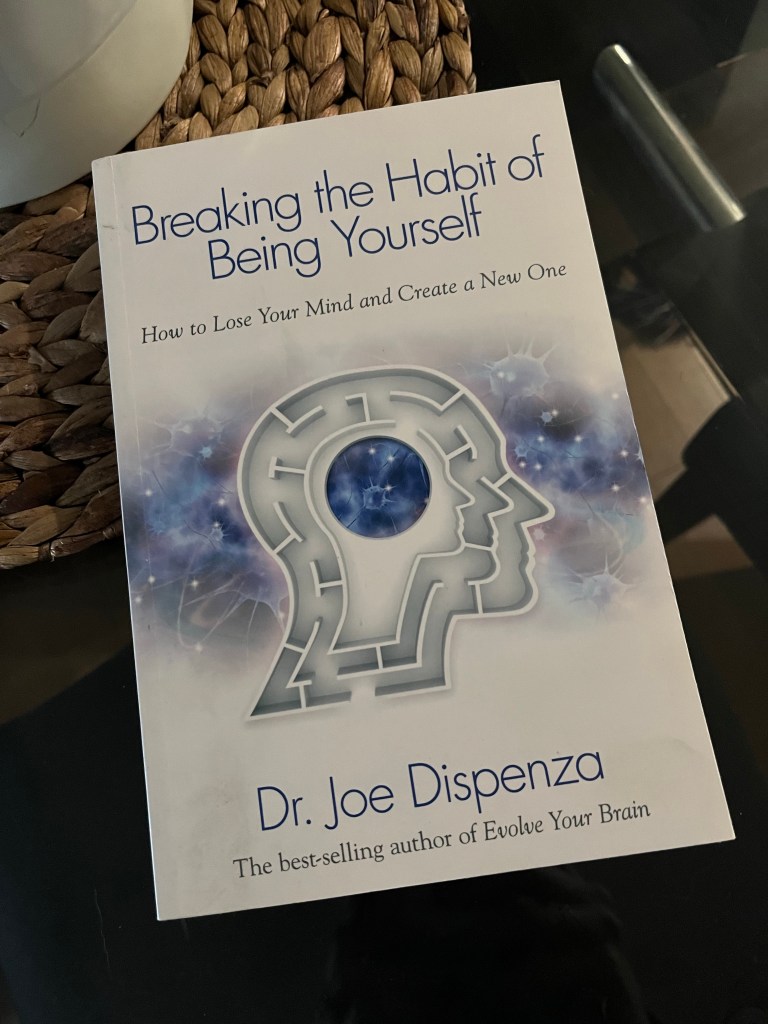
In the book, “Breaking the Habit of Being Yourself,” Dr. Joe Dispenza explores the power of the mind and provides tools for rewiring the brain to create a better life. He explains the science behind how our thoughts and emotions create our reality and how we can harness this power to make positive changes.
Dr. Dispenza shares insights on meditation, visualization, and other practices that can help us break free from negative thought patterns and habits. By using these techniques, we can create new neural pathways in our brain and change our perception of ourselves and the world around us. This book offers a pathway to transforming our lives and unlocking our true potential.
 Nourish Your Body, Mind + Soul